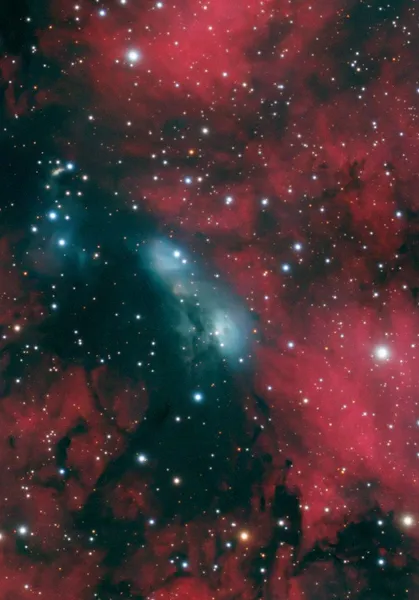
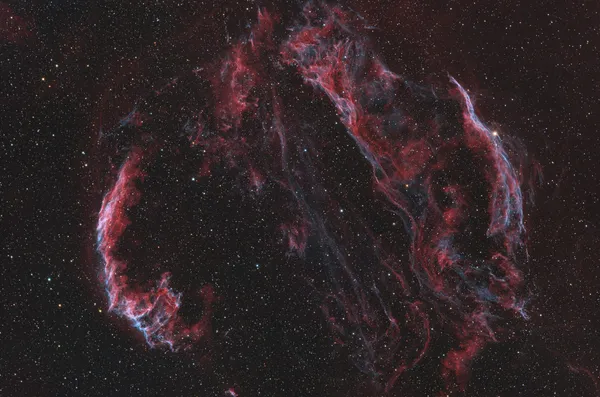
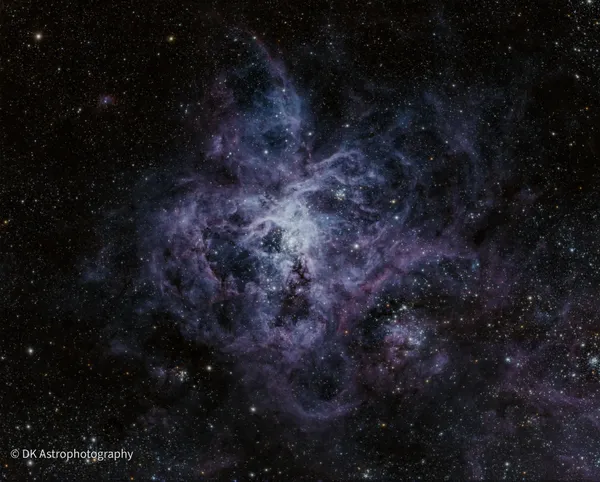
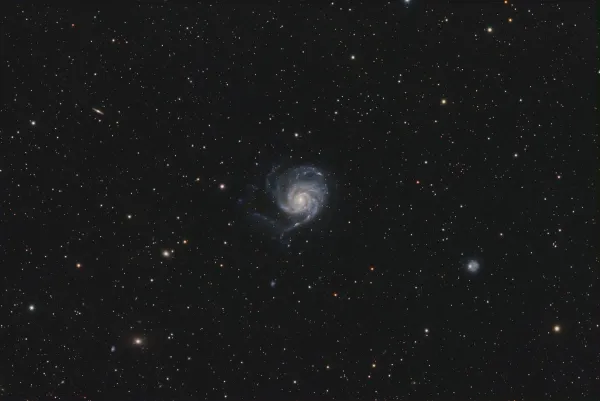
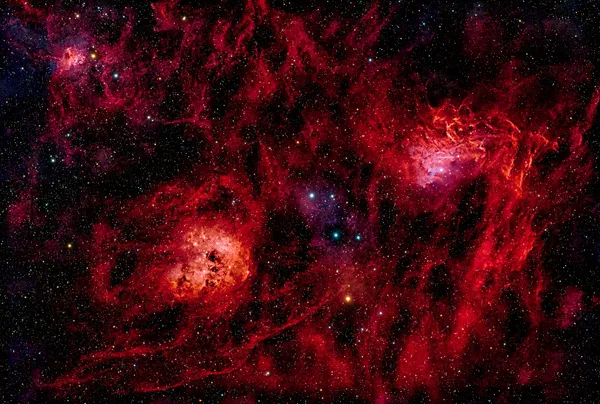
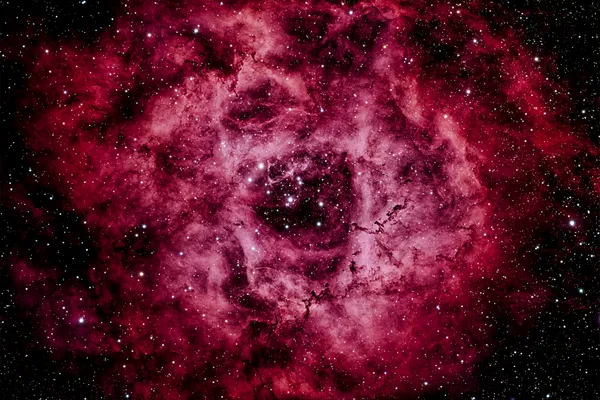
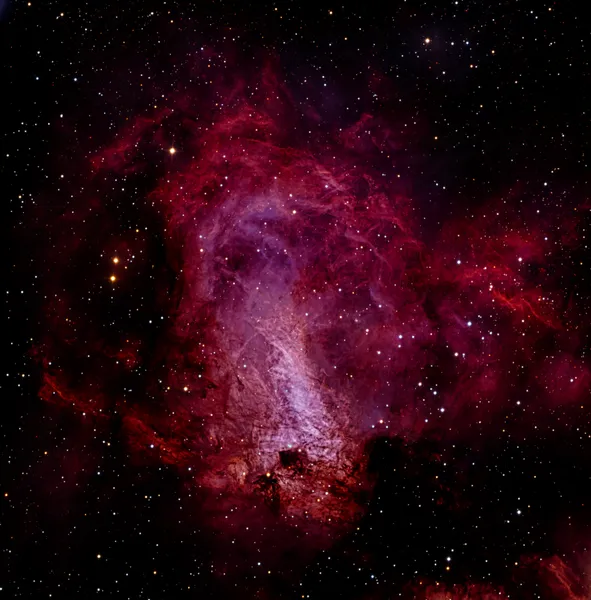
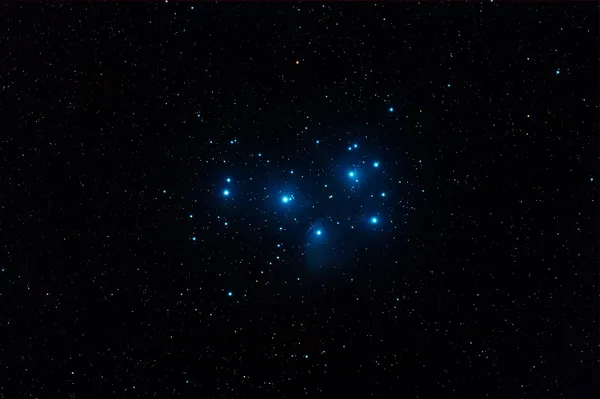
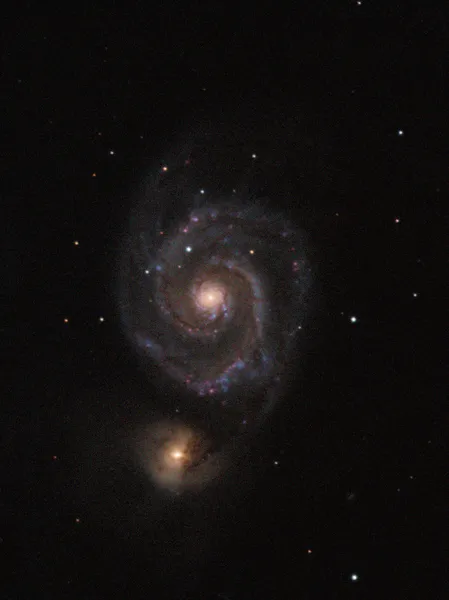
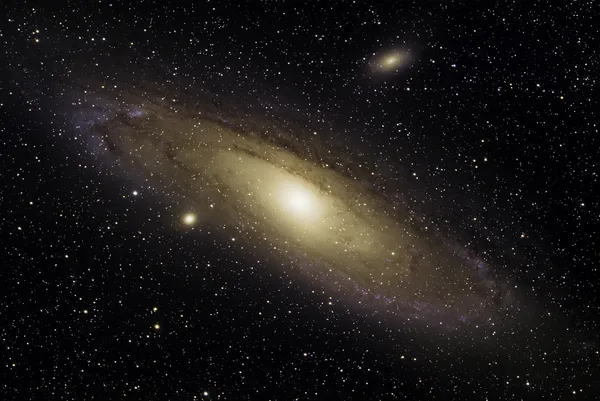
What you're looking at
Why this frame looks rough
This is a single exposure, usually a few minutes long, straight off the camera: grainy, gray, and faint. It has had nothing done to it except a quick stretch so you can see it at all. Most finished images in the gallery are dozens of frames like this one, sometimes hundreds, combined.
Stacking: from glass plates to pixel rejection
The word is literal. Astronomers working on glass plates would lay copies of several exposures of the same field one atop another, in register, and print through the stack: each exposure added a little more signal from the object and a little less of the random grain, and the stack reached fainter than any single plate could. David Malin made one such image at the Anglo-Australian Observatory from thirty-six plates of a single field. The technique outlived the glass, and the name came with it.
Today the stack is arithmetic. Software aligns every frame star to star, then for each pixel it looks at the whole column of values across all the frames and takes a robust average. Anything that appears in only one frame, a satellite trail, a cosmic-ray hit, a hot pixel, is thrown out before averaging: that step is called pixel rejection. The faint glow of a nebula shows up in every frame, so it survives. The grain is random, so it averages away. Noise falls with the square root of the frame count, so forty frames are about twice as clean as ten. That is why a night's work is many short exposures rather than one long one.
Why black-and-white?
Because the camera is black-and-white on purpose. A color camera has a fixed mosaic of tiny red, green and blue filters over its pixels, so each pixel only ever sees one color: only a quarter of them are red, only a quarter are blue, and half or more of the light in any one color never lands on a pixel that can record it. A monochrome camera has no such mosaic, so every pixel collects the whole band, at full resolution. Color is added afterwards by shooting through filters one at a time: red, green and blue for stars and galaxies, or the narrow bands that nebulae actually glow in, hydrogen, oxygen and sulfur. Each single frame is one of those bands. What you see above is one band of light from one object, and the color image is built from stacks of frames like it.